

Hotel & SPA Juffing
Faszientraining im Wasser
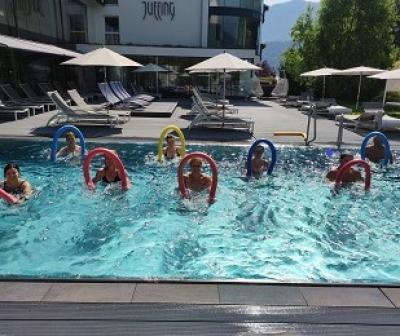
Faszientraining im Wasser
Zeitraum
Personenanzahl
1
2
3
4
5
6
7
8
Termine
Fr 16.10.2026, 10:30 - 11:15
1 Tag
€ 0.00
inkl. gesetzl. MwSt.
Fr 23.10.2026, 10:30 - 11:15
1 Tag
€ 0.00
inkl. gesetzl. MwSt.
Fr 30.10.2026, 10:30 - 11:15
1 Tag
€ 0.00
inkl. gesetzl. MwSt.
ausgebucht
Fr 06.11.2026, 10:30 - 11:15
1 Tag
€ 0.00
inkl. gesetzl. MwSt.
Beschreibung
Unsere Faszien wollen vor allem eines: bewegt werden. Im Wasser gelingt das auf besonders sanfte und zugleich wirkungsvolle Weise.
Beim Faszientraining im Wasser wird der Wasserwiderstand und -auftrieb genutzt, um mit gezielten langsamen Dehnübungen die Faszien elastisch und geschmeidig zu erhalten ohne dabei auf Muskelkraft angewiesen zu sein. Zudem werden Beweglichkeit, Koordination und Gleichgewicht geschult und es besteht keinerlei Verletzungsgefahr, auch für Ungeübte.
Freuen Sie sich auf ein abwechslungsreiches, federleichtes Training, das Sie mit einem ganz neuen Körpergefühl verlässt.
Beim Faszientraining im Wasser wird der Wasserwiderstand und -auftrieb genutzt, um mit gezielten langsamen Dehnübungen die Faszien elastisch und geschmeidig zu erhalten ohne dabei auf Muskelkraft angewiesen zu sein. Zudem werden Beweglichkeit, Koordination und Gleichgewicht geschult und es besteht keinerlei Verletzungsgefahr, auch für Ungeübte.
Freuen Sie sich auf ein abwechslungsreiches, federleichtes Training, das Sie mit einem ganz neuen Körpergefühl verlässt.
Beschreibung
Unsere Faszien wollen vor allem eines: bewegt werden. Im Wasser gelingt das auf besonders sanfte und zugleich wirkungsvolle Weise.
Beim Faszientraining im Wasser wird der Wasserwiderstand und -auftrieb genutzt, um mit gezielten langsamen Dehnübungen die Faszien elastisch und geschmeidig zu erhalten ohne dabei auf Muskelkraft angewiesen zu sein. Zudem werden Beweglichkeit, Koordination und Gleichgewicht geschult und es besteht keinerlei Verletzungsgefahr, auch für Ungeübte.
Freuen Sie sich auf ein abwechslungsreiches, federleichtes Training, das Sie mit einem ganz neuen Körpergefühl verlässt.
Beim Faszientraining im Wasser wird der Wasserwiderstand und -auftrieb genutzt, um mit gezielten langsamen Dehnübungen die Faszien elastisch und geschmeidig zu erhalten ohne dabei auf Muskelkraft angewiesen zu sein. Zudem werden Beweglichkeit, Koordination und Gleichgewicht geschult und es besteht keinerlei Verletzungsgefahr, auch für Ungeübte.
Freuen Sie sich auf ein abwechslungsreiches, federleichtes Training, das Sie mit einem ganz neuen Körpergefühl verlässt.

Zeichen verbleibend